Prefabricated Mass Timber Modular ADU Protoype Adaptable to the Steep Hillsides of Southern California
Our Modular Building Systems
Prefab Mass Timber Modular ADU System
|
Prefab Mass Timber Modular ADU System |
An adaptable housing system for complex terrain
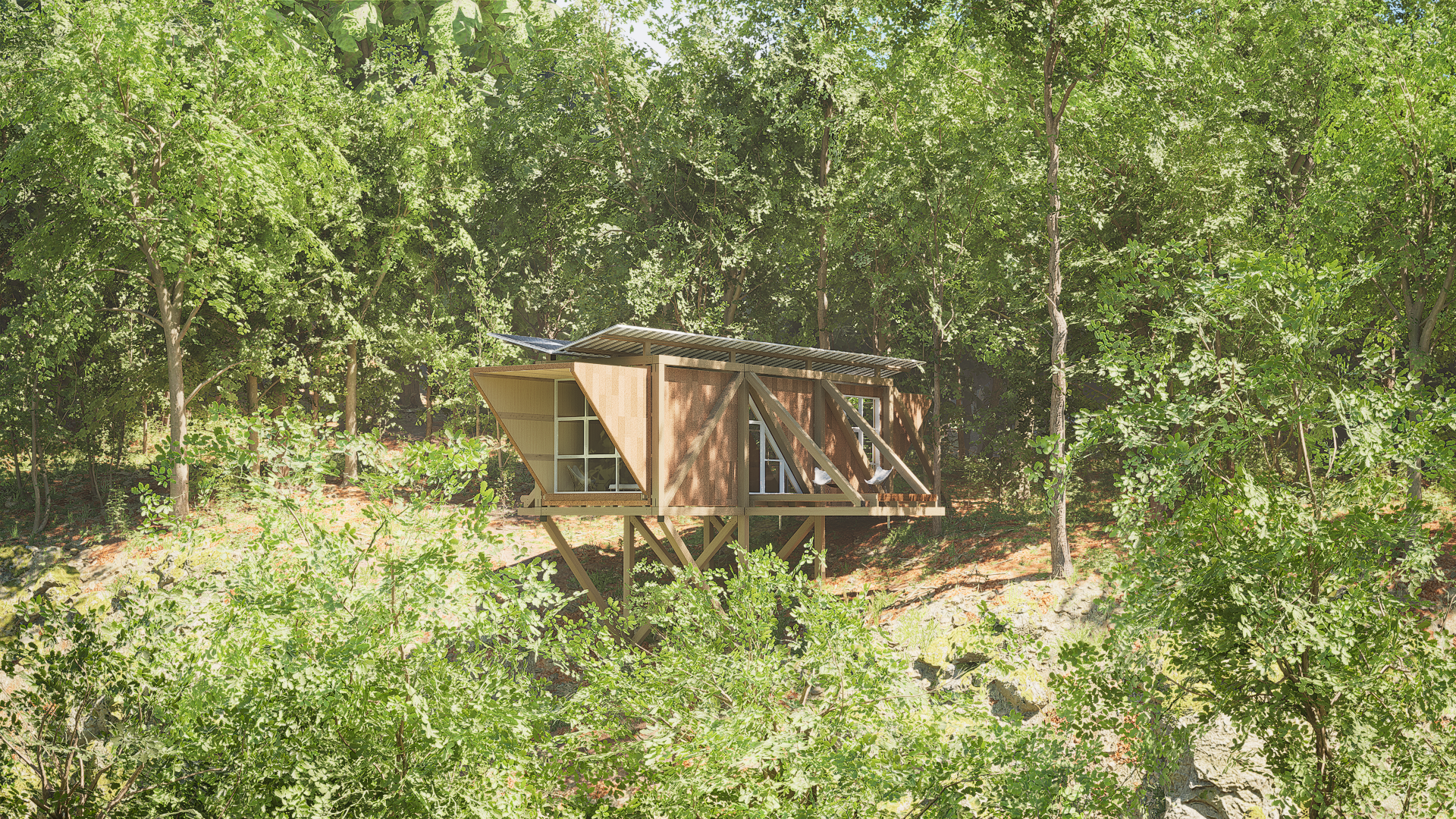
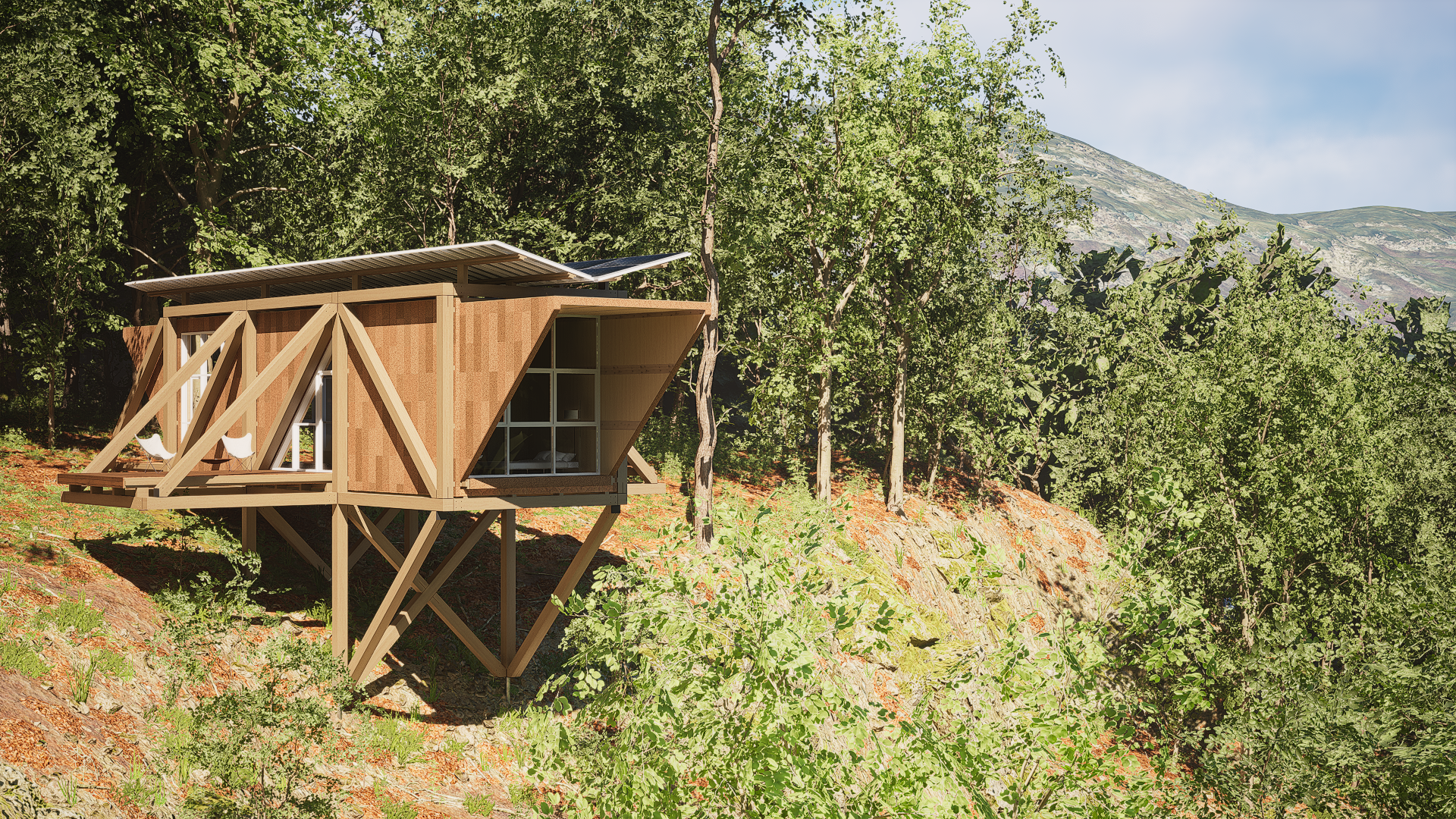
The Prefab Mass Timber Modular ADU System is a research-driven building solution developed to address California’s housing crisis while reducing the environmental impact of residential construction. The system responds to the specific challenges of steep hillside sites in Southern California, combining prefabrication, mass timber construction, and circular design principles.
This system demonstrates how mass timber modular construction can outperform conventional light-frame ADUs in terms of carbon storage, construction efficiency, occupant well-being, and adaptability to difficult terrain.
What the System Solves
Lack of affordable housing in high-density urban areas.
High carbon emissions associated with conventional construction
Limited adaptability of standard ADUs to steep or irregular sites
Noise, waste, and disruption caused by on-site construction
The need for scalable, replicable housing solutions
System Overview
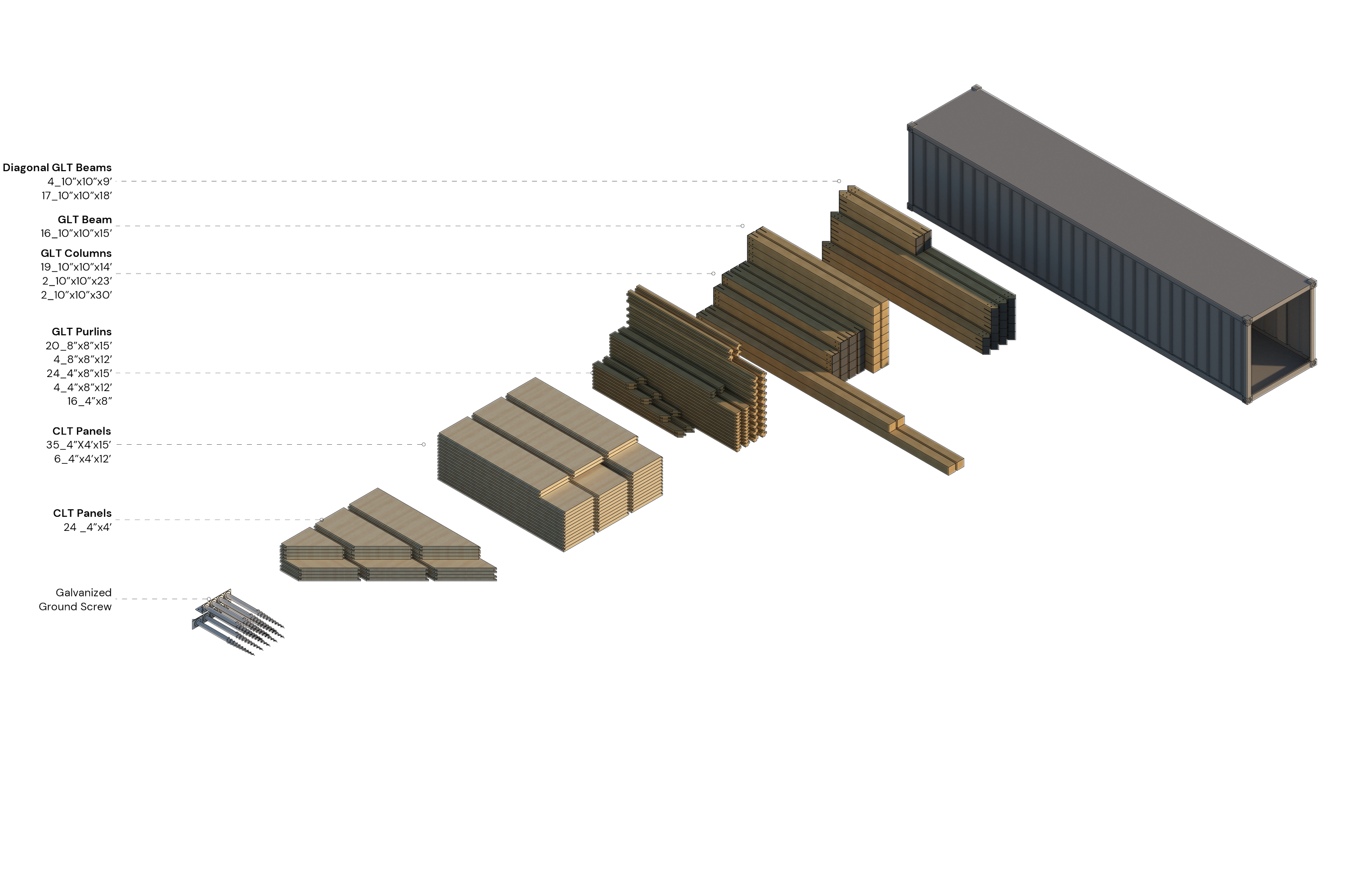
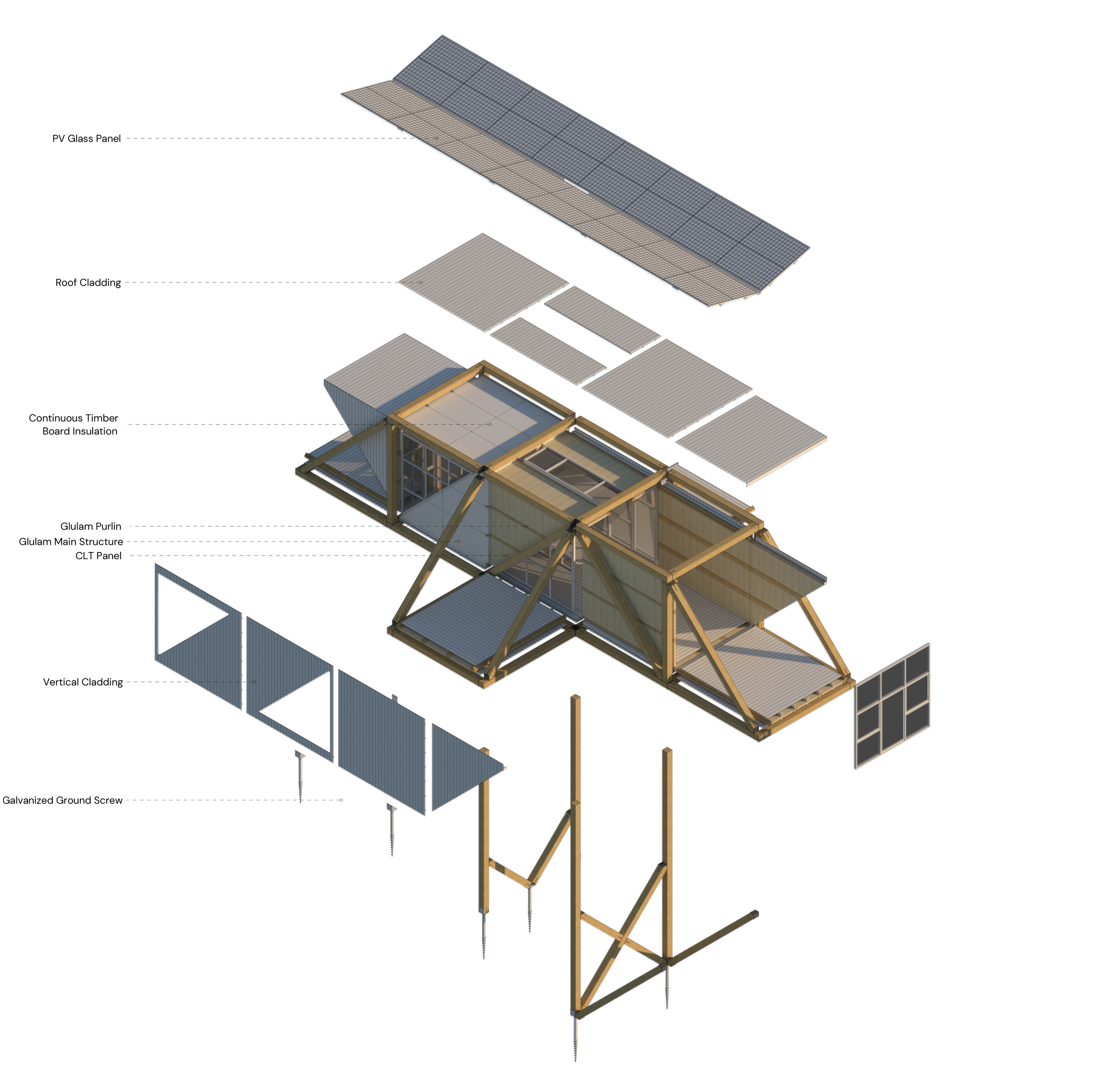
The system is based on a modular mass timber structure using CLT and glulam components, designed for off-site prefabrication and fast on-site assembly.
Its structural logic allows the unit to adapt to different slopes through an exoskeleton timber structure, minimizing the need for extensive concrete retaining walls.
Key characteristics:
Modular components designed for flexible growth and expansion
Prefabricated panels and structural elements are produced off-site
Rapid on-site installation with reduced neighborhood impact
Design optimized for Southern California climate conditions.
Environmental Performance
A comparative Life Cycle Assessment demonstrates that the mass timber ADU stores more carbon and produces fewer emissions than a conventional light-frame ADU of the same size.
Environmental benefits:
Net low-carbon or carbon-negative structural system
Reduced construction waste through prefabrication
Circular life cycle with potential for reuse, recycling, and biomass recovery
Design aligned with Design for Manufacture and Assembly (DfMA) principles
Material Strategy
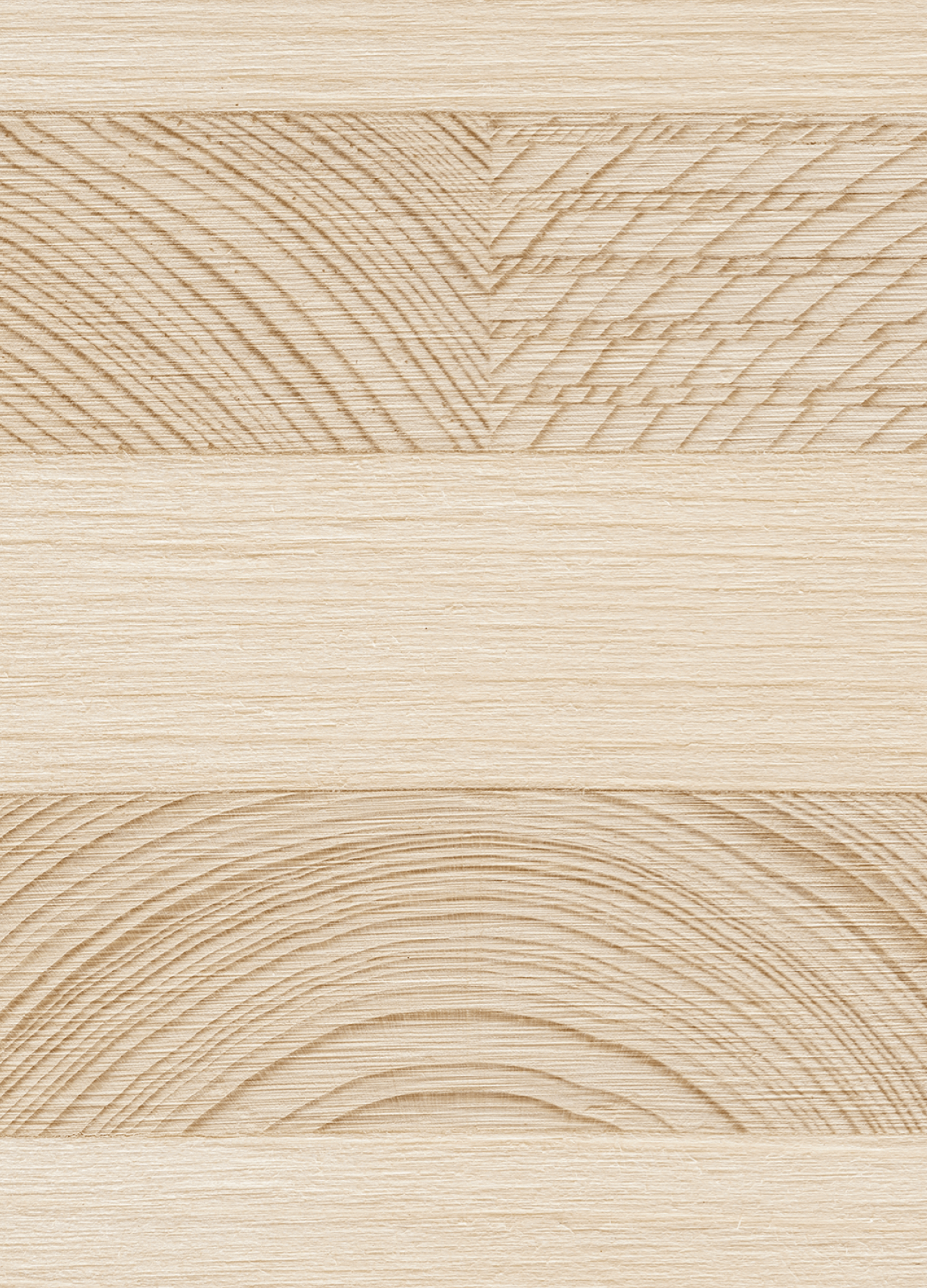
The system prioritizes bio-based and natural materials, specifically mass timber sourced from sustainably managed forests.
Material advantages include:
Significant carbon storage compared to light-frame construction
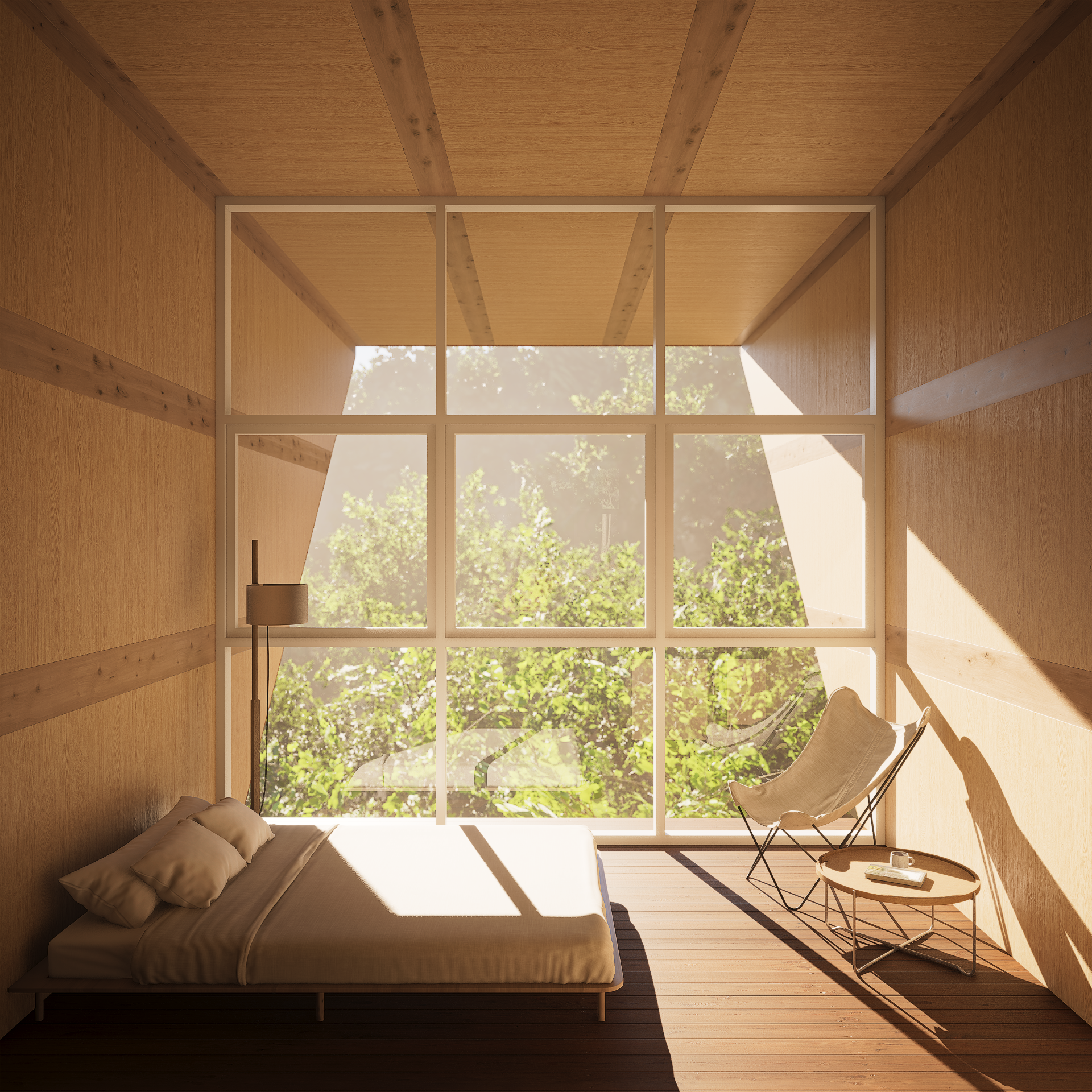
Improved indoor air quality through moisture regulation
Natural acoustic dampening and thermal comfort
Reduced embodied carbon over the building life cycle

Adaptability and Scalability
The modular logic allows the system to:
Adapt to varying site slopes and orientations
Expand over time based on occupant needs
Be replicated across different sites with minimal redesign
Serve as a prototype for broader housing and infrastructure applications
This makes the system suitable not only for ADUs, but also as a foundation for future modular housing solutions.
Who This Product Is For
Private homeowners in hillside or constrained sites
Cities and municipalities addressing housing shortages
Developers exploring low-carbon housing solutions
Institutions researching scalable sustainable construction
Organizations focused on climate mitigation through the built environment
Circular by Design
Practical wisdom to the full life cycle of buildings, designing systems that can be assembled, disassembled, and adapted over time.